
Wear Your Heart on Your Sleeve, Literally.
Words by Mathilda Gatsby
Edited by Rachel Hambly and Bailey Tolentino
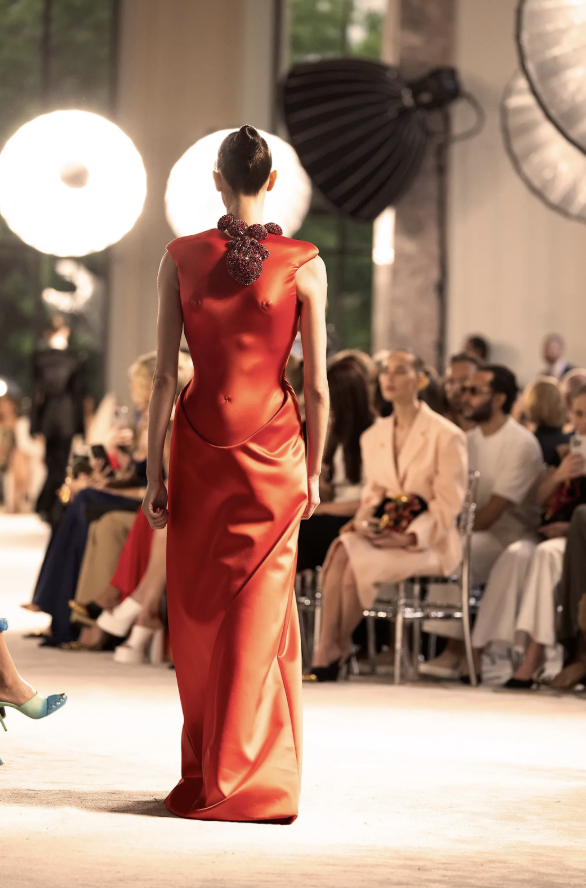
Schiaparelli’s Beating Heart Necklace on the runway, Fall 2021. Source: Women's Wear Daily
It is one thing to wear nude tones or sheer clothing, but to wear your insides on the outside is something that fashion designers have been experimenting with for a long time. Flesh, muscle, bone, sinew, and nerves become the ultimate pattern. It is understandably bold to create this type of look, as designers spend most of their lives attempting to create something fresh and new, yet these designs draw on the oldest form of inspiration: what is, rather than what is not, before our very eyes. When creating these designs, the scaffolding of the body becomes the bones of a corset, and the textures of different materials can evoke different sensorial experiences with flesh or hair. Designers and fashion houses such as Schapparelli and Robert Wun have utilised the body as a blueprint for their designs, begging the question of whether this form of art is another ‘layer,’ or the most ‘stripped’ clothing we can ever wear.
To live and breathe fashion takes on another meaning when the body not only wears the clothes but also inspires them. We can see the passion that goes into creating these stunning pieces when art, technology, and creative ingenuity are combined. Anyone with an ounce of interest in fashion will know about Schiaparelli’s 2025 Fall couture runway show featuring a viral necklace that draped across the model’s back and pulsed to simulate a beating heart. Labelled “haunting” by fans online, the necklace was created by renowned designer Danel Roseberry and inspired by Salvador Dalí’s 1953 Surrealist “Royal Heart” artwork, which featured mechanical elements that made it pulse. Placed down the back of the model, it sat atop a satin red dress with a backwards-facing bust, using the sleek, shiny material to create a smooth surface contrasting the rough textural surface of the necklace and padded out to make a cushioned, fleshy base. Roseberry’s collection, “Back to the Future,” also featured a dress with glittering eyes that looked out from the design, and a flowing tulle cloak reminiscent of a biblically accurate angel. The entire collection brought Dali’s Surrealist motifs to life through romantic and dreamlike constructions, blurring the lines between fashion and sculpture.
Fashion can be said to be art incarnate. The inspirations of life and nature have breathed themselves into designs that are not only beautiful but also create viral sensations, which only appear in the most daring designs. Viral designs, such as Roberto Cavalli’s backless gown worn by Zendaya at the Ballon d’Or photo call in Paris, featured a solid gold spinal column supporting the back of the dress. Unsurprisingly, Schiaparelli is one such fashion house, powering its way into the halls of fashion canon. Fans of Bella Hadid will remember the iconic “Lungs Dress” seen at the 74th annual Cannes Film Festival, from Schiaparelli’s Haute Couture Fall/Winter 2021-22 collection. The stunning form-fitting black wool dress featured an intricate gold necklace/chest piece on a heavy chain, with delicate gold pieces branching across Hadid’s chest that replicate the bronchial branches of the lungs. This was not just any statement piece; this was breathtaking.
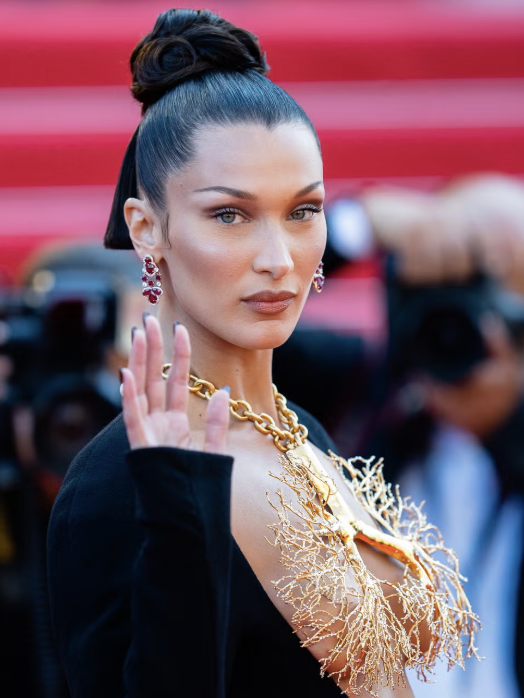
Bella Hadid at Cannes 2021 wearing the Schiaparelli ‘Lungs Dress’. Source: Harper’s Bazaar

Zendaya wearing Roberto Cavalli, 2021. Source: Bones Brigade: Skeletons in Fashion | Vogue
Schiaparelli has led the way for other designers to explore how the internal can become the external in fashion design. We have seen the boning of corsetry and lines of piping whose stiffness reminds us of skeletal structures and of literal configurations inspired by anatomy. Elsa Schiaparelli’s “Skeleton Dress” from 1938 is just one such example of the skeletal system mapped onto fabric, with trapunto quilting outlining the ribs and the pelvic system atop a matte-black silk, skintight evening gown now housed at the V&A Museum. Other designers, such as Alexander McQueen and Iris Van Herpen, have taken this x-ray vision of design and created their own renditions of the skeleton dress, from punky to ethereal. These designs have captivated fashion audiences and wowed on the runway and red carpet alike.
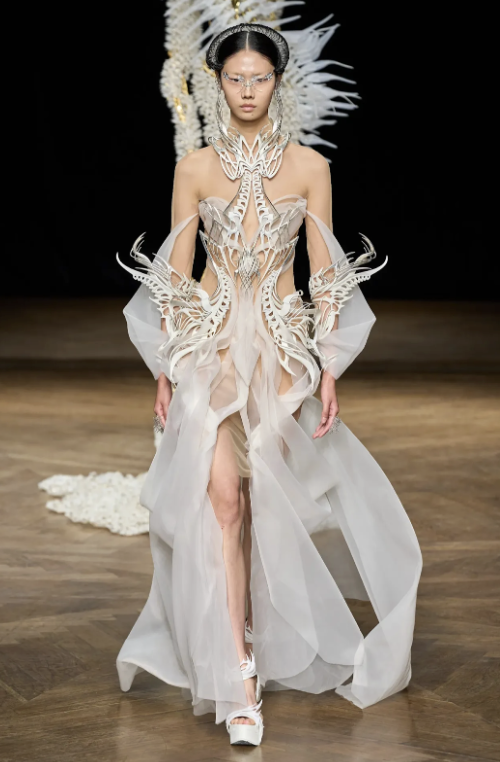
Iris Van Herpen Fall 2022 Couture. Source: Bones Brigade: Skeletons in Fashion | Vogue
It is not just the skeletal system, however, that can inspire these material incarnations of anatomy. We have seen the likes of Robert Wun utilise materials and structure to emanate different elements of anatomy. Beyond fleshy tones, the fabrics drape and tier as if they were layers of skin being peeled back from muscle, recalling the visuals of old Renaissance paintings; the body like a martyred saint or vanitas scene, set for consumption. Wun’s Haute Couture “Time” for Fall/Winter 2024 explored the place of memory and materiality, mapping the journey into and through the body as each piece walked down the runway. Opening with a stunning evening gown covered in multi-coloured crystals, featuring a solar system print and a hip-length veil, the first dress was intended to represent the first fall of snow in winter. Exhibited on a darkened runway and with the model’s arms outstretched, the experience was ephemeral and alien, representative of the soul. Followed by a gauzy flesh-toned dress with a mask of a human face atop the model’s head, the Dune-like dress perfectly captured the looseness and textural draping of skin, and the shell we exist within. The viscerality of the body was then captured perfectly by a structured red dress with padded inserts and layered pleating, which was almost uncomfortably textured to look like the muscular structure. These ephemeral creations explored the body's unravelling as it moves through time and space, making the show feel like an exhibition at an observatory or a science museum. When the body is stripped back and beauty begins to wane, the gracefulness of fabric choice and sartorial ingenuity gives way to the processes of life, death, and decay.
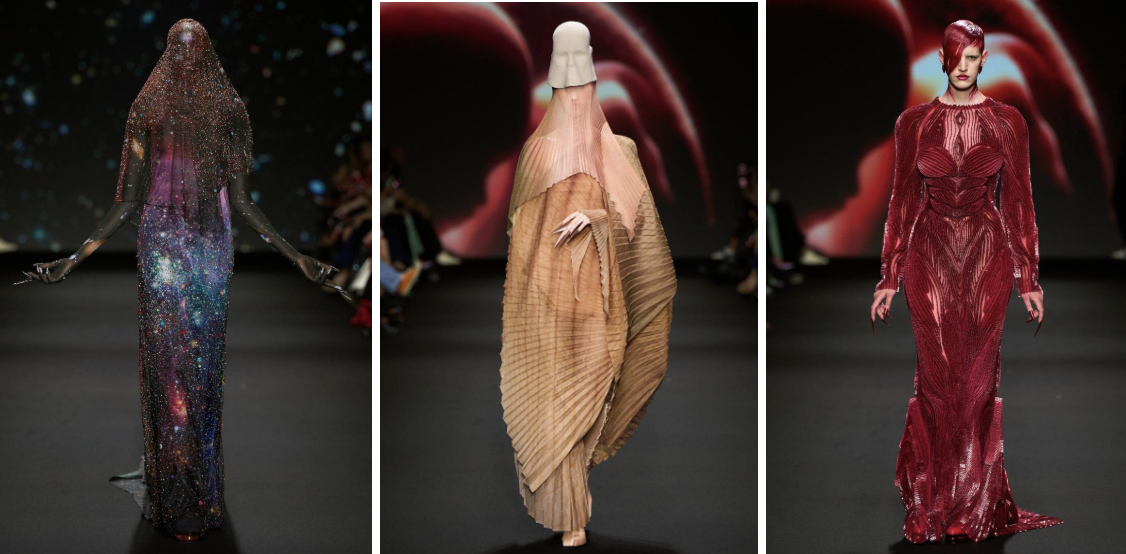
Robert Wun Haute Couture Fall/Winter 2024 Collection entitled “Time.” Source: FAULT Magazine
The experience of viewing these pieces was as crucial as the pieces themselves. Moody lighting and edgy music contributed to exploring how humans naturally respond to the body. We intrinsically have a morbid fascination with blood, gore, and viscerality, but these designers show that there is also a strong sense of beauty in the raw and exposed body. There is a luxurious quality to the rich materiality of these creations, particularly through bold, definitively recognizable colours or textures, conjuring words such as ‘ephemeral’ or ‘sensorious’ and captivating audiences through the experience of movement and carnality.
Stitching lines reminiscent of veins that map their way across the body, padding and pleating that echo the folds and textures of flesh and muscle. All aspects of fashion materiality can echo that of the human body. And yet, some designers grasp this embodied feeling, using their designs to explore hidden parts of the human form and to leverage our innate fixation on the body to create living art. These designs are art and sculpture incarnate. By layering material over the subject matter, it can be easy to question whether this layering is actually more revealing than regular couture designs, proving that inspiration can come from every aspect of human creativity and exploring how internal beauty can become external and universal.