
More Than a Cover: When Vogue Dresses Resistance
Words by Kate Hilditch
Edited by Rachel Hambly and Bailey Tolentino
The March 2026 digital cover of British Vogue featured Gisèle Pelicot to mark the publication of her memoir. If the name sounds familiar, it’s because in September of 2024, she changed history in the largest rape trial France had ever witnessed. Lasting three and a half months, leading to new legislation on consent, the story ignited fury and empathy across the world. Three years prior, she was enduring an unthinkable nightmare: her husband, Dominique Pelicot, would drug and rape her — sometimes two to three times a week— for almost a decade. Instead of a private trial, outnumbered by lawyers, police, and her husband, she opted for a public one. For Pelicot, this was not the time for silence. And as she wrote on the cover of her new memoir, “shame has to change sides.”
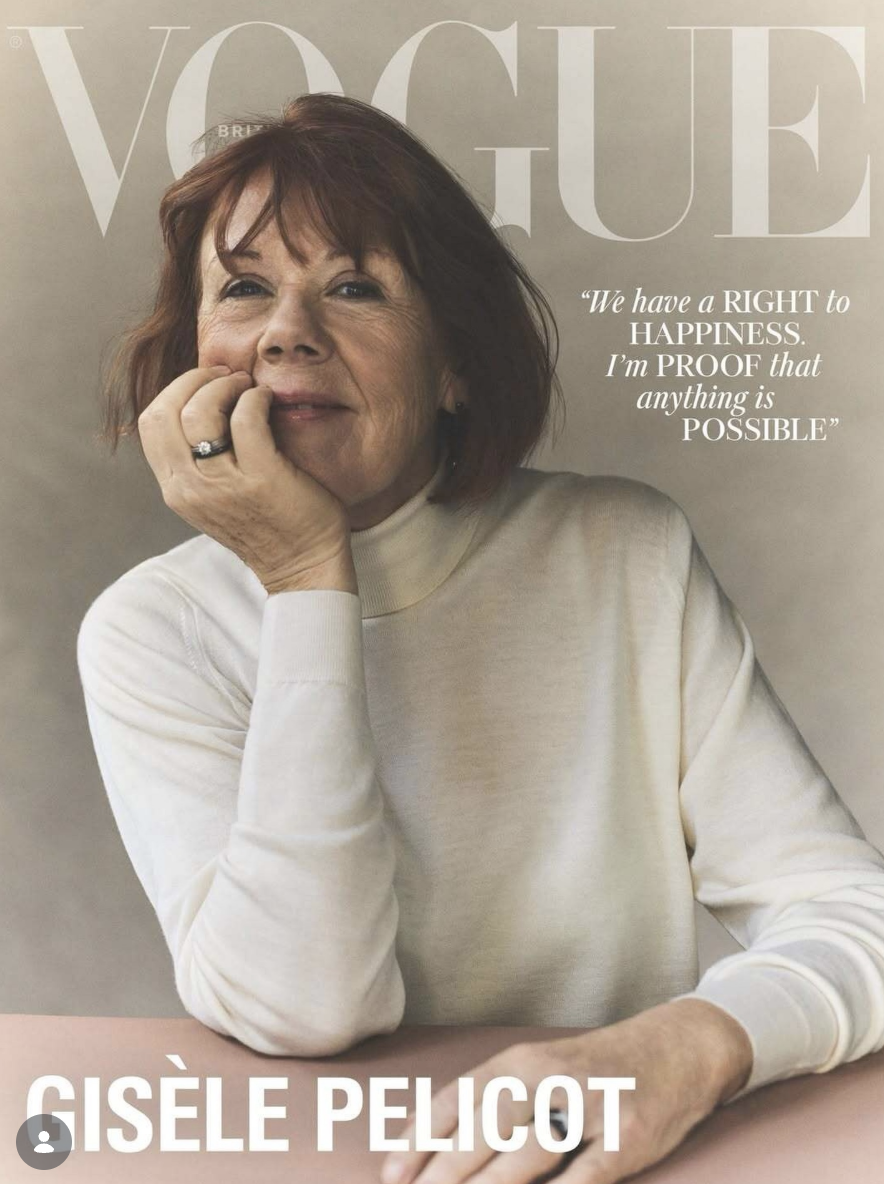
Gisele Pelicot for the March issue of British Vogue
An editorial like Pelicot’s is the kind that promises a hopeful future for female journalism and fashion magazines. Seeing a fashion institution like Vogue take on the story feels inspiring. Our hopes should be high for British Vogue under Edward Enninful, who has begun featuring activists, frontline workers, and politicians alongside models. The September 2022 cover featuring Queen Elizabeth II, following her death, marked another moment when fashion paused for national reflection. Women today are put in these boxes surrounded by fashion, beauty, or the arts. Vogue and Pelicot are yelling in people's faces: yes, we want fashion, but we also want politics and substance. We can handle both, and we do every day on apps like TikTok or Instagram, where our algorithms go from FW26 fashion trends to missile strikes in a single scroll.
But is Pelicot’s digital-only cover really progress, or a representation of hesitation? On its print cover, British Vogue featured 25-year-old model Bhavitha Mandava. Mandava deserves her flowers, but Pelicot does too. There has long been an industry standard that prioritizes specific aesthetic, logistical, and psychological factors rather than representing the ‘normal woman’. Gisele Pelicot deserves recognition for her bravery, and in this case, it may not directly impact fashion, but it does impact women. It impacts how we see ourselves and how we see power and shame. That inevitably affects culture and fashion.

A courtroom artist’s depiction of the trial.
Pelicot herself said she made it a point to dress especially elegantly when she appeared in court during her rapists’ trial, not just to annoy the defense but to support herself. Clothes are our weapons of metaphorical and sometimes literal resistance. Fashion is a vehicle through which women can boldly assert their authority and identity, and Pelicot is just one modern example. Clothes affect human relationships; they are not simply a private or personal matter. They do, and have always had, an overt message. In courtrooms, parliaments, and on red carpets, clothing becomes testimony before words ever are.

The idiom of Pelicot’s new memoir is “shame has to change sides.”
In December 2024, Dompinique Pelicot was sentenced to 20 years of prison. As of October 2025, rape in France is understood to be any non-consensual sexual act. Pelicot’s new book, A Hymn to Life, establishes her as a heroine of our time whose story will inspire change and passion for decades to come. Her story has given a voice and a hope to millions, and her words have become a rallying cry. If fashion reflects culture, then Pelicot’s cover is not an anomaly — it is a forecast. The future of style will not just be about the clothes, but about who stands inside them.