
Chrome Hearts and the Art of Imitation
Words by Hannah O’Keeffe
Edited by Rachel Hambly and Bailey Tolentino
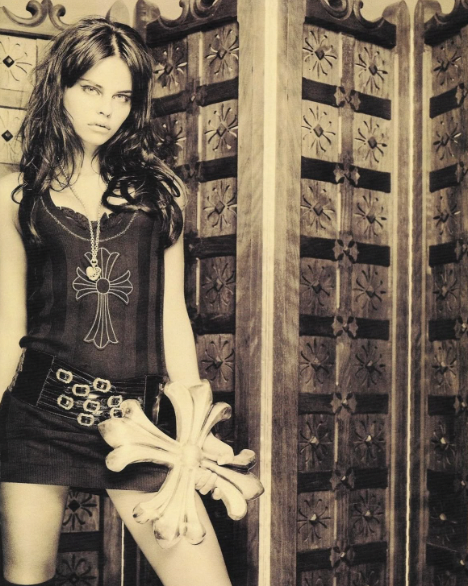
2001 Chrome Hearts Magazine Ad
Founded by Richard Stark, John Bowman, and Leonard Kamhout in Los Angeles in 1988, Chrome Hearts quickly took over the luxury streetwear scene. Known for sterling silver jewelry adorned with Celtic crosses and their raw leather goods, the brand has settled into an identity as the rock star of the fashion scene.
With an estimated brand value just under $1 Billion USD, Chrome Hearts’ popularity took off in the early 2000s, launching collaborations with the likes of The Rolling Stones, Comme des Garçons, and BAPE; and opening exclusive boutiques in New York, Tokyo, and Los Angeles. They’ve ultimately become a style insignia for some of the world’s wealthiest, often sported by big names such as Bella Hadid, Playboi Carti, Cher, and Timothee Chalamet — among countless others. The company continues to grow, with sales on the secondary market skyrocketing 2200% in only 6 months in 2021. As with any major brand’s success, dupes and counterfeits quickly flooded the market, making very similar designs more accessible and affordable — a trend that has become a sustained moral debate in fashion.
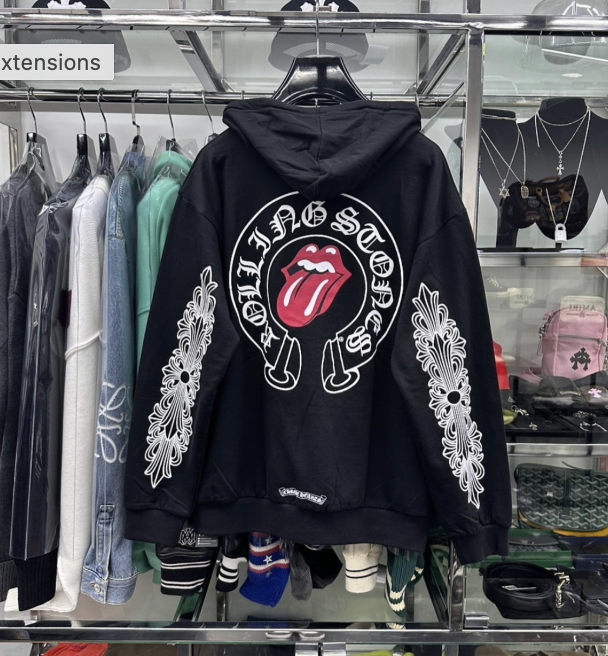
@downtownstore.thailand - Instagram
Recently, Chrome Hearts announced loud and clear that they’re not afraid to bring it to court. Over the past several years, they claim to have filed over 100 lawsuits against companies for trademark infringement. SNKRDunk, a resale and authentication platform, found that approximately 1 in 10 to 15 Chrome Hearts products on the secondary market are fake, one of the highest counterfeit rates among the brands they track.
The brand has filed cases against retailers like Fashion Nova, Sears, Dolls Kill, and JCPenney, targeting any use of their horseshoe or celtic-cross brand identity, claiming the marks are ‘confusingly similar’ and may ‘cause mistake or to deceive customers… all to the detriment of Chrome Hearts.’
In September, Chrome Hearts LLC filed a trademark infringement against legend Neil Young’s new band, named ‘Chrome Hearts,’ which was formed in 2024. The fashion company claimed that the band's use of its title and its appearance on merch infringed the brand’s registered trademarks. While the lawsuit is still in the early stages, it certainly raises questions of the First Amendment, the restrictions of the five freedoms, and to what extent creative expression can be withheld.
The brand’s crackdown on dupes and “inspired by” culture may signal the start of a larger shift in the luxury world. With the cost of living only continuing to rise in the past couple decades and consumers not having the disposable income to spend on luxury goods, the turn to counterfeits or “dupes” is merely a reflection of new economic realities.
Chrome Hearts isn’t the only brand struggling. In 2021 alone, U.S. Customs and Border Protection seized over 27,000 shipments containing goods that violated intellectual property rights. Designer handbags to sneakers alike are facing an uphill battle against a booming counterfeit market and a challenging economy.
The undeniable truth is that dupes pose financial and reputational challenges for the brands they imitate. They may not only cause revenue loss to the company but also lead consumers to mistake them for the real thing, misperceiving the brand’s quality and diluting the very exclusivity that underpins the luxury fashion industry. Furthermore, the low prices of counterfeits often raise questions about the ethical and moral costs of their production and distribution.
In the current battle between luxury and lookalikes, Chrome Hearts isn’t taking imitation as flattery; instead, it's bringing it to the courtroom, re-igniting the debate over where the line should be drawn between protecting intellectual property and keeping fashion economically accessible.