
Ubuntu Returns: Community, Culture, and Storytelling on the St Andrews Runway
Words by Rachel Hambly
Edited by Maria de Feo
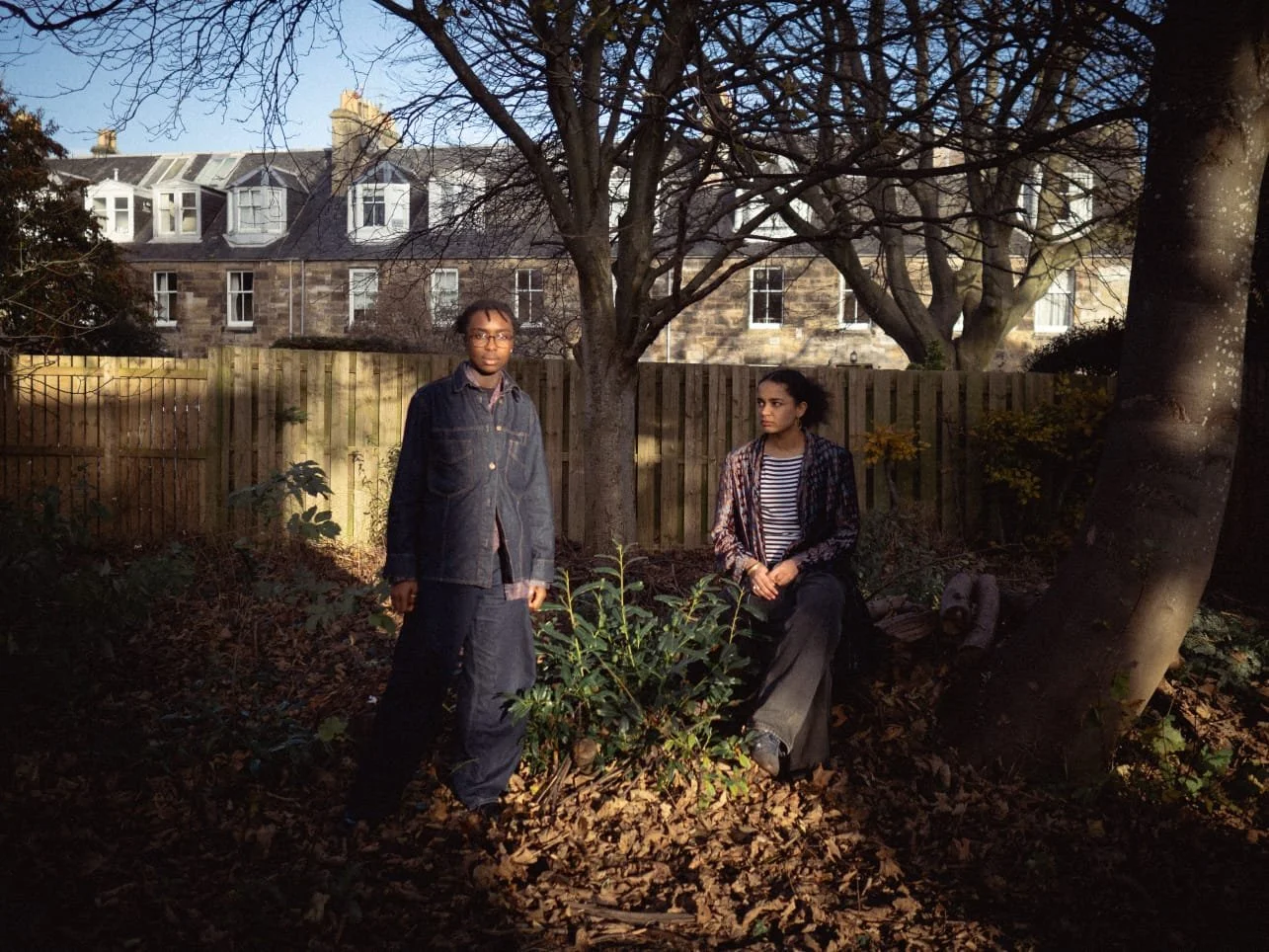
Executive Director Daka Zvekare and Creative Director Amara Baker-Onyancha, photographed by Michael Wu
After a three-year hiatus, Ubuntu - the African and Caribbean fashion show - is making a long-awaited return to the University of St Andrews fashion scene. Founded in 2017 as a subcommittee of the African Caribbean Society (ACS), Ubuntu ran annually until 2022, when it paused to regroup. Now, with a 24-person committee and renewed clarity of purpose, Ubuntu 2026 promises to be not just a fashion show, but a fully immersive act of storytelling.
Speaking with Creative Director Amara Baker-Onyancha and Executive Director Daka Zvekare, it became apparent that Ubuntu was never just about clothes. From the outset, the goal was to create space, specifically for African and Caribbean students to express their cultures through fashion, sound, movement, and art. "Scotland is not a very diverse place," they explain, "and African fashion is still not mainstream, even in Europe." Ubuntu emerged as a response to this absence, offering visibility where it was lacking and community where it was needed.
The pause between 2022 and now was practical. With too few people to sustain the show's scale, the committee made the difficult decision to step back rather than dilute their vision. But the excitement never faded. "We were all just so excited to have this opportunity again," they say. With a larger, committed team, Ubuntu's return feels both ambitious and assured. They can make it happen precisely how they want to.
At the heart of the show is the philosophy that gives Ubuntu its name. Rooted in many Southern African cultures, the Ubuntu philosophy is often interpreted with the phrase "I am because we are." For the committee, this idea of valuing community over individualism is not an abstract theory, but a lived reality that shapes every aspect of the show. As they put it, "I am the existence of other people." This belief resonates deeply across African and Caribbean cultures, where identity is formed through relationships, shared history, and collective responsibility.
This commitment to community extends beyond the runway. Ubuntu 2026 is supporting Datakirk, an Edinburgh-based charity focused on improving digital literacy, particularly for children. The choice was intentional. "A lot of people in St Andrews take tech access for granted," they note, while Datakirk works directly with young people who do not. The Ubuntu team met with the charity in person and was struck by the tangible, local impact of their work, a direct embodiment of Ubuntu's values.
The theme of this year's show, Ethnobotany, reflects the deep connections between people, land, and nature in African and Caribbean cultures. Ethnobotany, the study of relationships between humans and plants, provides the conceptual framework for a show structured in three acts: Roots, Growth, and Bloom.
Roots centers on ancestry and respect for elders, acknowledging the foundations laid by previous generations. This act includes collaboration with the Fife African Caribbean Network, intentionally bringing multiple generations into the space. Growth focuses on collective movement forward, exploring how communities evolve together rather than in isolation. Finally, Bloom is a joyful celebration: vibrant, powerful, and unapologetically loud. The goal, they explain, is "celebrating our cultures as loudly as we want to.”
The structure mirrors the life cycle of a plant, but also the cycles of human life. There is room for reflection on who surrounds you, how they shape you, and how you, in turn, grow. Blooming is not individual success detached from others, but a shared moment of celebration rooted in community.
Storytelling is central to this vision. In many African and Caribbean cultures, knowledge is passed down orally, through elders and shared narratives. Ubuntu draws on this tradition by refusing to limit itself to a conventional runway format. This is not simply "people walking up and down" a runway. Instead, the show weaves together performance, sound, movement, and fashion to communicate ideas that are often intangible; things that cannot be fully expressed through words alone.
When asked what they want the St Andrews student body to understand about Ubuntu, the answer is refreshingly honest. "The show is created by us, for us," they say. Ubuntu does not aim to cater its creative vision to external expectations. While everyone is welcome to attend and learn, the priority is authenticity rather than marketability. "We don't want to be inauthentic. We want to remember our goal: to celebrate African culture."
At the same time, Ubuntu's vision reaches beyond the university bubble. With connections to ACS groups in Edinburgh, Dundee, and Glasgow, the committee hopes to expand its audience while staying true to its core message. Community, after all, cannot be bounded by a single campus.
Ultimately, Ubuntu is best understood not as a fashion show, but as a moment that engages all the senses and invites audiences into a holistic experience. Every element is intentional. Every choice reflects care. Through performance and presence, Ubuntu expresses knowledge that is felt rather than explained.
As Ubuntu returns to St Andrews, it does so with confidence, clarity, and purpose. Through its community and collaborations, it is ready to bloom.