
Deconstructivism to Destruction: Fashion Amidst the Collapse of Society
Words by Mathilda Gatsby
Edited by Rachel Hambly and Bailey Tolentino
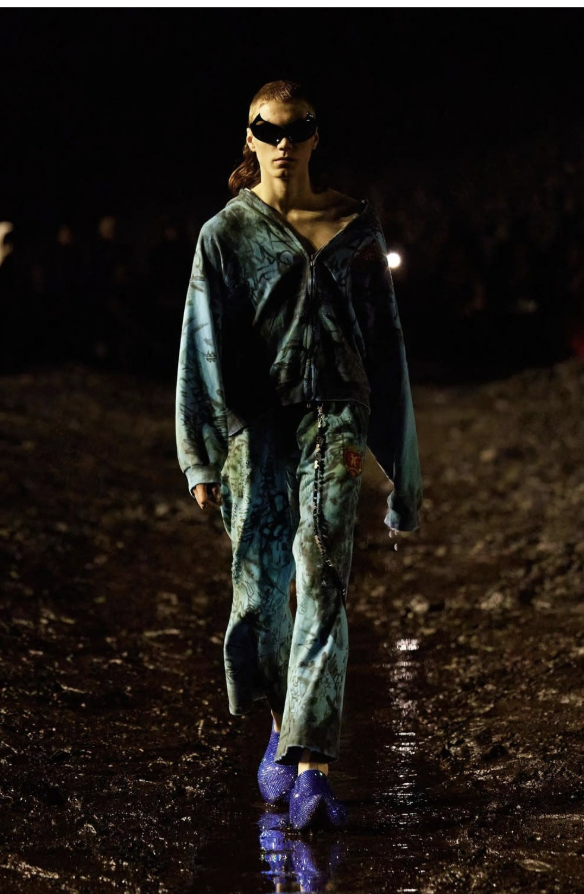
Balenciaga “Nuclear Mud Show” runway look for Spring/Summer, 2024
Source: RUNWAY MAGAZINE
We all have an item of clothing in our wardrobe that is falling apart. Seams exposed, fabric fraying, rips and holes littering the pattern. This might be a family heirloom, emotional-support jumper, a favourite pair of muddied Converse, or just an old, low-quality t-shirt that we haven’t gotten around to binning just yet. Flung in the back of a cupboard under a pile of newer and more exciting purchases, this distressed item is a relic of days-past.
Fashion has never existed independent from society. Social, economic, cultural, political, and technological changes have been metaphorically sewn into cloth since garments were first created. Historical milestones have written themselves into the drapes and stitches of designs, sparking debate, outrage, or joy; reflecting anxieties, desires, and countercultures. In moments of prosperity, fashion has tended towards excess, such as the empire-waist gown representative of the First French Empire, or the vibrant, loose designs reflecting the economic growth and relative freedom of the “roaring” 1920s. Inversely, in moments of crisis, fashion has splintered, fractured, and diminished, such as in the practical designs of the 1940s wartime period. Fashion has flirted with deconstruction and controversy, as in Marie Antoinette’s famously tone-deaf milkmaid dresses at the height of the Ancien Régime, which sparked anger and rebellion among the impoverished citizens of eighteenth-century France. In the postmodern era of the late twentieth century, designers such as Vivienne Westwood, Martin Margiela, Rei Kawakubo, and Balenciaga have produced ‘deconstructivist’ fashion, reflecting a society coming apart at the seams and being rebuilt in a new era.
However, in light of the fast-fashion industry, the intentionality of deconstructivism has recently diminished due to increasing polarisation between class and cultural expression. Deconstructivist fashion is meant to be a visual language for the discontent, the angry, and the revolutionary. In our era of inequality, instability, and environmental collapse, it is inseparable from social disillusionment and decay. When contemporary designers mock the lived realities of impoverished people and brands prioritize quantity over quality, fashion becomes an image of consumerism rather than an artistic indicator of social change.
Deconstructivist fashion began as a concept in the 1980s and 1990s, with the intent of making fashion an intellectual movement. Often using the structure of clothing as an external element, designers stripped fashion back to its basics, experimenting with provocative rawness and unfinished aesthetics. Drawn from Jacques Derrida’s philosophical system, deconstructivism implies a decoding of meaning and designer intent, manifesting materially in deconstructed and reconstructed works. When it arose as a movement, restructuring the hierarchies of the fashion world was at the forefront of designer intent.
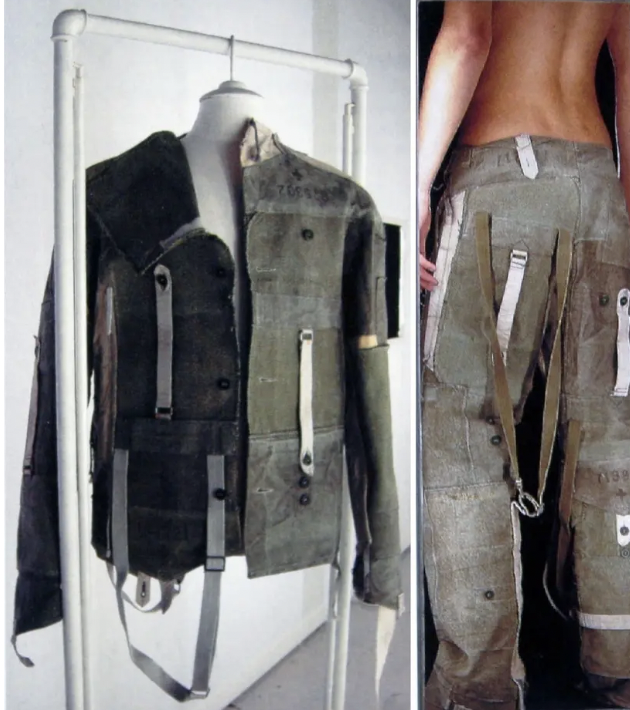
Outfit for Martin Margiela’s first show (Spring 1989)
Source: ARCHIVE
Martin Margiela put on his first avant-garde deconstructivist fashion show at a derelict playground in 1989. With unconventional materials, raw seams, and reassembled vintage garments, Margiela had a profound impact on deconstructivist and anarchical fashion, paving the way for greater democratisation and re-evaluation of fashion following postwar anxieties. Vivienne Westwood was another famous example of postmodern deconstructivist punk, intent on destroying the very foundations of fashion and cultural arts, and rebuilding from the ground up. Inspired by the Dada tradition, her avant-garde-turned-trash designs famously made their way into the influential punk music scene of the 1980s and 90s; her collaboration with the Sex Pistols formed a symbiotic relationship between fashion and music that marked a countercultural response to the disillusioned postwar generation. With intentional rips, oversized safety pins, and her reinvention of corsetry as outerwear, Westwood stripped back and rebuilt the foundations of avant-garde fashion. She was both a product of and a victim of late-stage capitalism. Layers of clothing, flashes of metal, and an abundance of painted leather jackets reflect the increased industrialisation and cultural sentiment of the 1980s. The rebellious spirit and economic recession in Thatcherite Britain saw dirtied and ripped clothing both as a necessity for the impoverished working class and as an intentional marker of cultural awareness by designers such as Westwood. The intentionality of deconstructivist fashion indicated the cultural awareness that fashion had as both a rebellion against the clean-cut boomer-era designs of the 1960s and a reflection of an increasingly chaotic world facing numerous economic and sociopolitical shifts.
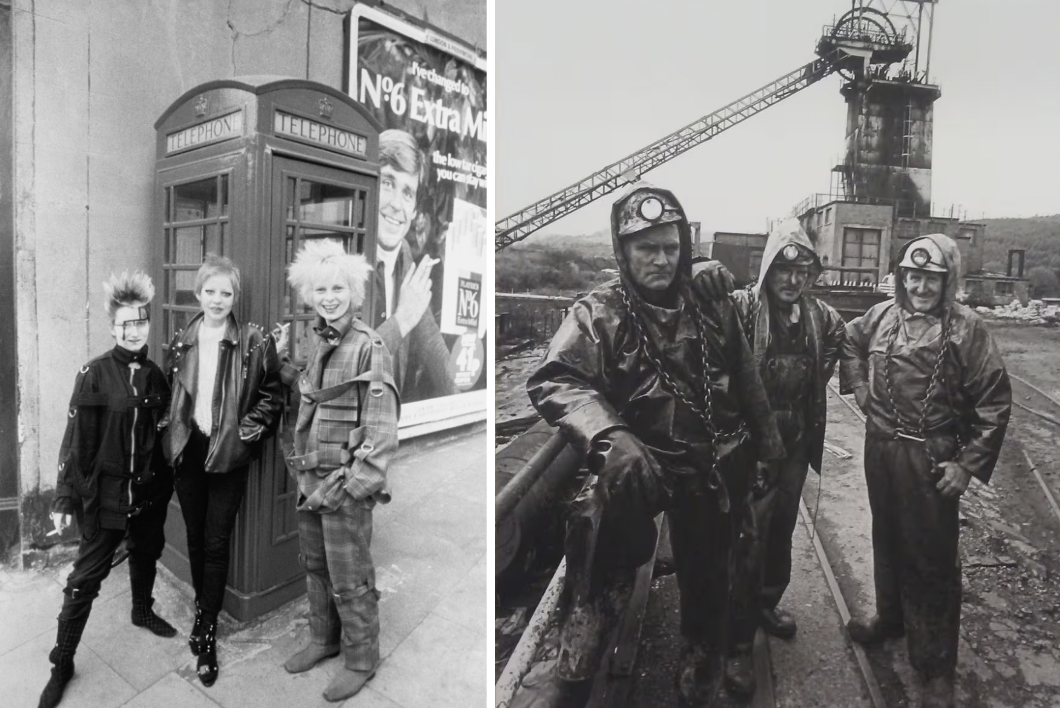
Vivienne Westwood street style, 1977 (left), and Salvage men at Abercynon Colliery, 1989 (right)
Source: WWD and Wales Online
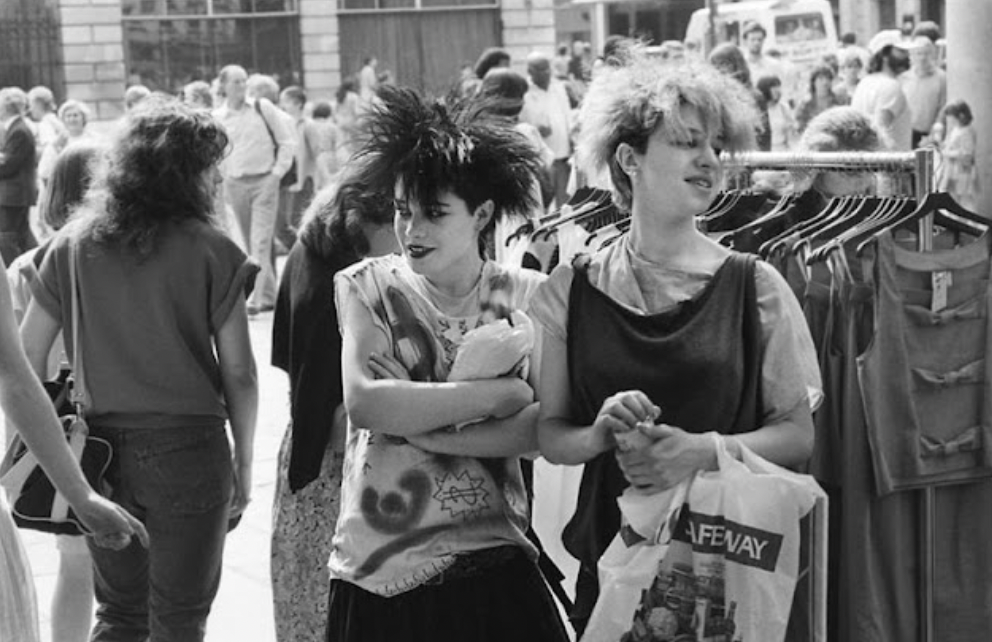
Street style of young people in the 1980s
Source: Vintage Everyday
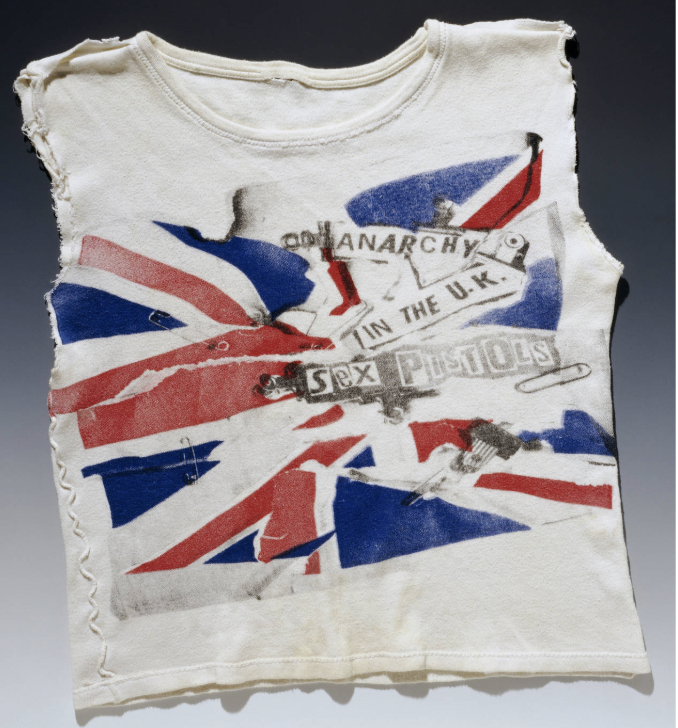
Jamie Reid archive, t-shirt by Jamie Reid, Malcom McLaren, Vivienne Westwood and Johnny Rotten (London 1976)
There is a distinct contrast between intentional deconstructivism and insensitive destruction, notable in the contrast between 1970s designer Rei Kawakubo and contemporary luxury brand Balenciaga. Kawakubo flirted with infamy when she debuted her rebrand, Comme des Garçones, in 1981. The Japanese designer shocked the Paris fashion elite with moth-eaten holes, asymmetric silhouettes, structural deformities, and textural cuts— but was met with accusations of aestheticising poverty, and the collection was labelled “Hiroshima Chic”. Kawakubo’s intentionality shed light on the hypocrisy of fashion elitism and, like Westwood, she sought to contrast the glitz and glamour of high fashion with visible excess and political incorrectness. She disrupted traditional aesthetics — synthesising American pop culture with Japanese consumer technologies — exaggerating industrialised design with her rebellious, bicultural spirit. This was a daring intervention that was proportional to the political shifts of the time: dragging fashion down from a pedestal and collapsing hierarchies between designer and buyer.
In direct opposition, the brand Balenciaga has courted controversy with its deconstructed designs that are more out of touch with reality than daring and conscientious. Whilst the brand positions itself as intentionally controversial and critical of society, the material expense and ignorance of social critique make it more hypocritical than edgy. In a step away from Kawakubo’s intentionality, Balenciaga has incited news articles like "Fashion or Trash-ion?", "Sneaker Freak Friday", and "The homeless look" with their contemporary designs ripped and muddied, and marked with at least a $1,290 price tag. Debuted at Paris Fashion Week Spring/Summer 2024, the exhibition “Nuclear Mud Show” was supposedly an attempt to be more “down to earth” and attract a broader clientele. However, as models splashed down a muddy runway wearing destroyed trainers and dirty outfits, with AirPods in their ears and one model touting house keys attached to her ponytail, the brand undoubtedly aestheticised poverty and seemed to rub people’s noses in the widening wealth gap rather than make any political argument. With the controversial rapper Kanye West opening the show, it appears more like the wealthy mocking the poor, indicating the social and psychological unravelling of contemporary fashion. Has it become rich to look poor? Or is this just a mockery of social divisions?

Balenciaga’s “Paris High Top Sneaker Full Destroyed” in black and white courts controversy for aestheticising poverty for a high price tag
Source: WORLD OF BUZZ

Rei Kawakubo design, ‘Comme des Garçons, Body Meets Dress - Dress Meets Body’, spring/summer 1997 (in The Metropolitan Museum of Art)
Source: © Paolo Roversi for FAQ Magazine
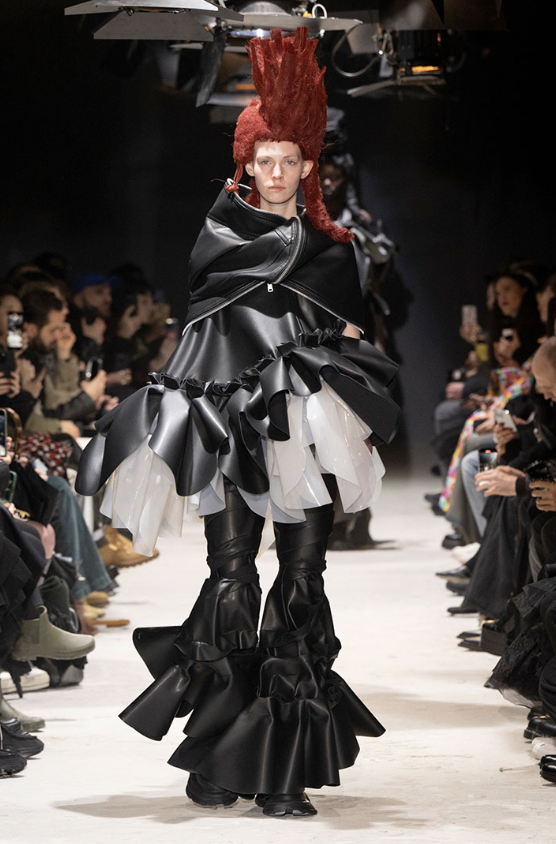
Rei Kawakubo for Comme des Garçons (Spring/Summer 1997)
As riches masquerade as rags, the performance of poverty on the runway collides with the economic realities off of it. At a ground level, a widening cultural and socioeconomic divide is emerging as political opinions become more polarised and geopolitical tensions shift. With the UK in a state of economic decline and the cost of living at an all-time high, economic intensity has been normalised rather than intentional, and everyday fashion is still reflecting that. Disguised by an outpouring of media, geopolitical rivalries and tensions, and polarising culture wars, attention is being directed outwards to the image of maintainable consumption rather than inward to the silent collapse of society. On the one hand, performative charity shopping is thriving, with microtrends on social media promoting ‘vintage thrifting hauls’ that undermine the point of second-hand shopping by the volume of clothes bought. Where 80s/90s deconstructivist fashion indicated the bare essentials of design, contemporary minimalism indicates the aesthetics of austerity. Minimalist designs, poised as “quiet luxury,” are an aesthetic choice for those who can afford it, but a necessity for those who cannot. The neutral tones and patternless designs indicate an unconscious mourning of the decline in our reality. It is an aesthetic language of reduction in a society struggling to contain excess, even as demands increase.
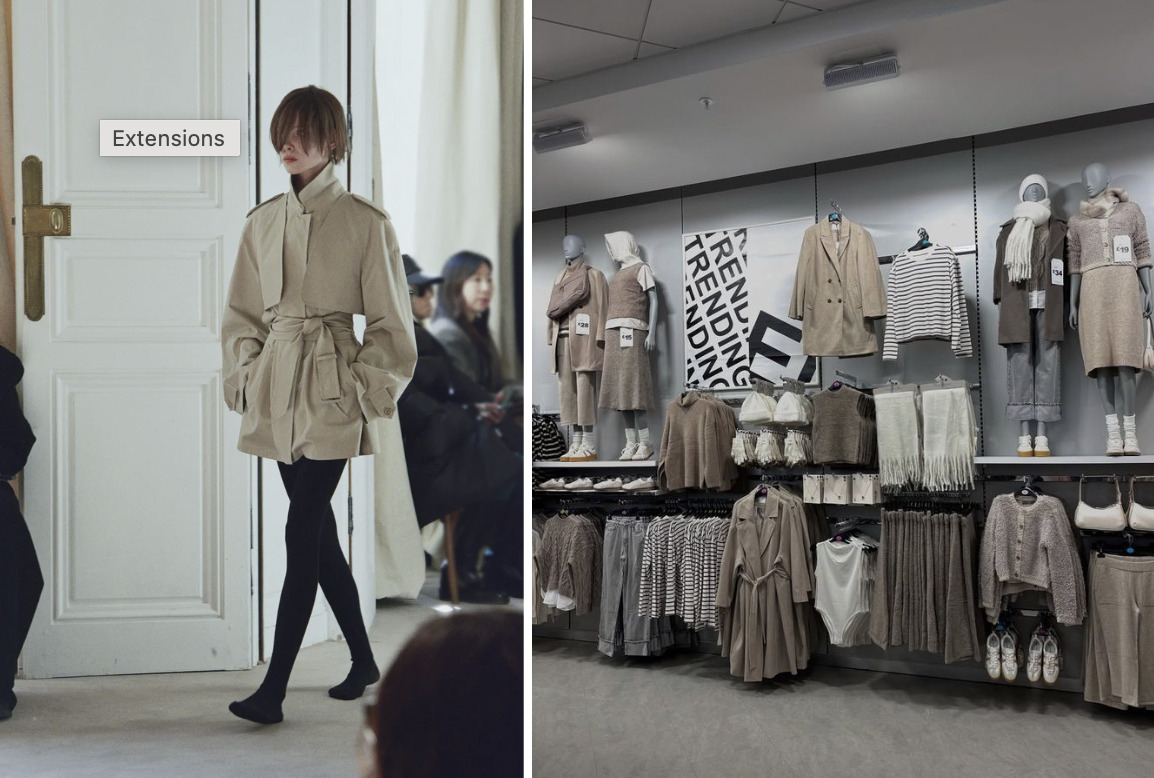
The Row, look 20 for Women’s Winter Collection, 2025 (Left); Primark winter neutrals, 2024 (right)
Sources: The Row; Primark on Pinterest
Today’s runways and High Street shops are littered with distressed fabrics, distorted silhouettes, unfinished edges, and marks of construction. However, this is no longer intentional — it is an erosion of culture and design. In the era of late-stage capitalism and climate crisis, refinement is being replaced by mass-market SHEIN dupes, which have turned intentional deconstructionist fashion into poor-quality, deficient fashion. The quality of clothing being produced mirrors social disillusionment and societal fracturing. Increased mass consumption and social peacocking have led shops to rely more heavily on fast fashion to keep up with the insatiable demand for the latest trends. According to a 2019 study by Business Insider, fast fashion contributes over 10% of the world’s global carbon emissions, and 85% of all textiles go to the dump each year. The numbers continue to rise, tightening the fist of corporate capitalism around an exhausted planet. This means that not only is fast fashion contributing to the climate crisis, but the speed at which people consume clothing and content reflects the speed at which the planet is hurtling toward an irreversible state of decay. Each item added to the cart is another hand in the countdown to catastrophe.
As we feel the increased weight of environmental concerns, so too do we feel the heavy draping of social pressures. Contemporary designers such as UK-based Bethany Williams, and Kenyan brand Suave are using social and environmental decay both as a material and as a message, by upcycling fabrics and using environmentally-conscious design to fight back against these distressing statistics. However, with economies tanking, prices soaring, and fissures widening, these smaller designers have to fight harder to be seen, let alone make a difference. Names such as Zara and H&M are still dominating the market, and everyday consumers can only buy at affordable prices. This is not to say that luxury or couture designers do not have some degree of self-reflexivity, but many media outlets have called out these brands for ‘greenwashing’ for publicity. Despite Zara’s new Join Life initiative, Eco-Stylist reported that Zara’s lack of transparency has not led to much change in its sustainability output, beyond flashy statistics and future goals, falling into the same superficial pitfalls as Balenciaga. From a cynical perspective, Zara perfectly mirrors the shifting terrain of the human soul in crisis, and it is no wonder that “brain rot” has become the latest trend, reflected and refracted in the mounds of textiles thrown to waste, only to be seen for 30 seconds in an advertisement on somebody’s social media feed.
We can see a marked shift from intentional deconstructivism to unintentional destruction. What was once layered is now stripped of care or consequence, substituting intention for unravelling. As the world accelerates and intensifies, fashion cannot help but try to keep up, sacrificing emotion, the environment, and enjoyment. The garment at the back of your wardrobe is more than just a relic of the past; it is an indication of the present; it is no longer an exception but a blueprint. If we look in the mirror at what fashion can truly offer us, we see that the collapse in our society is not just melancholic; it is now prophetic, sewn into the fabric of reality.