
Threads of NYFW: Fashioning Hope & Empowerment
Words by Tallulah Bates
Edited by Rachel Hambly and Bailey Tolentino
With winter’s chill still lingering, New York Fashion Week rekindled the industry’s spirit, drawing it close to a glowing showcase of fresh collections. Between the 11th and 16th of February, the frozen city played host to a plethora of shows–from the trailblazing creativity of Collina Strada and Marc Jacobs to the powerful line of Carolina Herrera, the youthful energy of Coach, and the classic refinement found in Ralph Lauren. Regardless of their particular aesthetics, there appeared to be an underlying theme across many designers’ latest collections: an attempt to reclaim the vibrancy of America’s past. To better grasp how this took shape, we can carefully examine three of the aforementioned collections and how they propose we navigate the future.
Carolina Herrera
Wes Gordon’s latest show for Carolina Herrera took place in the iconic Meatpacking District, where industrial concrete floors and walls were animated by hand-painted, geometric murals by artist Sarah Oliphant. The setting was further offset by a collection of organic silhouettes, full-bodied skirt suits, and cheeky shoe-print silk separates. Guests were transported to the chromatic extravagance of the 1980s, their eyes moving between floral embellishments, bows, lace, sequins, shiny jacquard, and daring flashes of animal print. To think of the 80s is to picture an America at full voltage–economically dominant, newly global, drenched in colour and unapologetic vibrancy. Everything felt electrified. Gordon’s bold choices call for an appreciation of agency and self-empowerment, particularly for women. The show was marked as a “tribute to women in the arts”, and was walked by the artists whose works were featured: from painter Amy Sherald, to artists Anh Duong, Ming Smith, Rachel Feinstein, and Eliza Douglas, to gallerist Hannah Traore, and muse Flora Currin. Carolina Herrera’s upcoming Autumn 2026 collection should not be construed as a longing for the lost decade of the 80s–a time when Reaganomics ruled with a gold-plated fist–but rather a return to the triumphs born of such vivacity. In the modern day, perhaps it is time to take up this energy once more, following in the footsteps of inspiring women featured in this show.
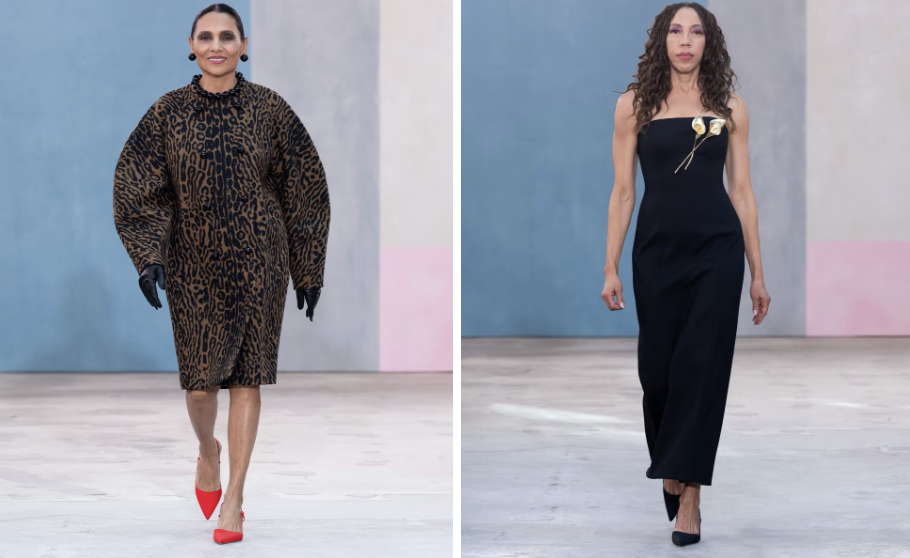
Images sourced by RUSSH, featuring Ming Smith, photographer & Amy Sherald, painter (Courtesy of CAROLINA HERRERA)
Coach
Beneath sixty-foot ceilings and towering marble columns of the neo-renaissance venue of Cipriani NYC, Coach’s guests gathered in warmth and glow, waiting patiently before lights dimmed and LCD Soundsystem’s American Dream began to pulse through the room. The true essence of Americana may remain ambiguous–possibly different for each consumer–but the images pinned up on Creative Director Stuart Vevers’s autumn moodboard make a promising start: “a portrait of a young Jodie Foster, a blonde Cali skateboarder, ’70s flares, and a set from the Wizard of Oz” (via interview with Vogue). Each of these evokes the ideal American spirit: young, free, nostalgic. But not melancholy; Vevers calls for “a shared sense of optimism as we follow a new generation into their next adventure” (via interview with Prestige). His outfits moved from monochromatic looks to exuberant brights with ripped black denim shorts giving way to red, white, and blue jeans. Battered jerseys and chewed-up runners reminisced about 1990s teenage grunge, an era of hardship for many, but also an era of optimism and eagerness for the next millennium. Vevers appears to have recognized a desire for a shared mindset among today’s younger generations. By bridging youth cultures across decades, we find inspiration and motivation to keep living, keep creating, and keep looking forward.
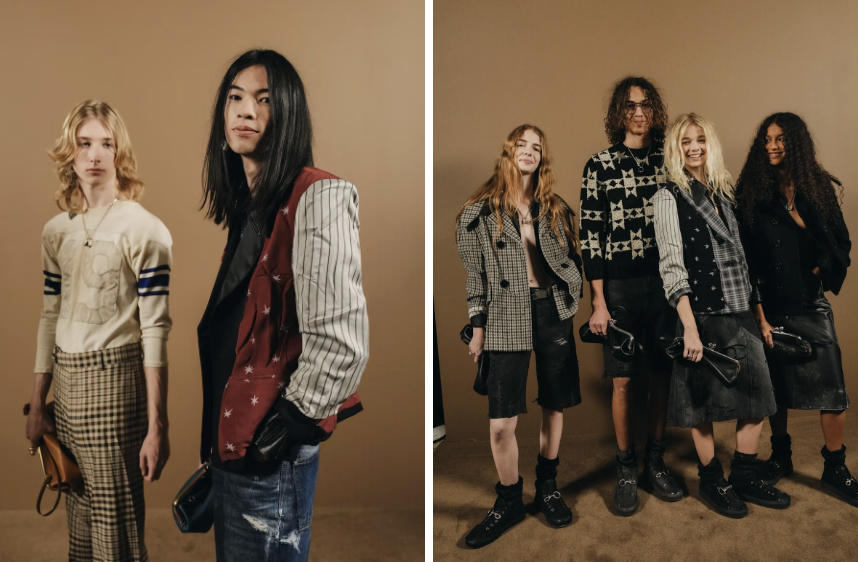
Images sourced by AnOther Magazine (Courtesy of COACH)
Ralph Lauren
Hosted in Tribeca’s iconic Clock Tower building, Ralph Lauren’s Autumn 2026 collection offered notes of storybook whimsy, timeless Americana, and fusing tradition–a classic theme for the brand–and the contemporary. Like Coach, there was a definite youthful energy surging through the collection. Leather and shearling chest-baring jackets, worn by both male and female models, encourage the blurring of binaries between gender and identity. Today’s generation isn’t preoccupied with definitions; we are simply seeking to be, a quest proving increasingly formidable in a world obsessed with categorisation. Palestinian-Dutch and American model Gigi Hadid opened in a corseted wool top and maxi skirt, brought together by a heavy silver belt. Such metallic accessories–chains, brooches, detailing– were frequent throughout the collection. That, alongside structured riding boots and sophisticated tailoring, brought a juxtaposition of elegance with utility, heritage, and modernity, strength and femininity; as though armouring the modern woman. Indeed, Hadid returned later, clad in a glorious velvet halter gown with a chainmail capelet, evoking Joan of Arc. As put by the New York Times, Lauren has always held fast to his “enchanted views of American history and American style,” and this show was no exception. At a time when Trump’s grotesque billions are drawing in blood-sucking sycophants of the nouveau riche, this collection–and the entirety of the Ralph Lauren brand–retaliates, waging the strength of the new generation, bolstered by memories of the past and ideals of fairy tales, without losing touch with what we are fighting for.
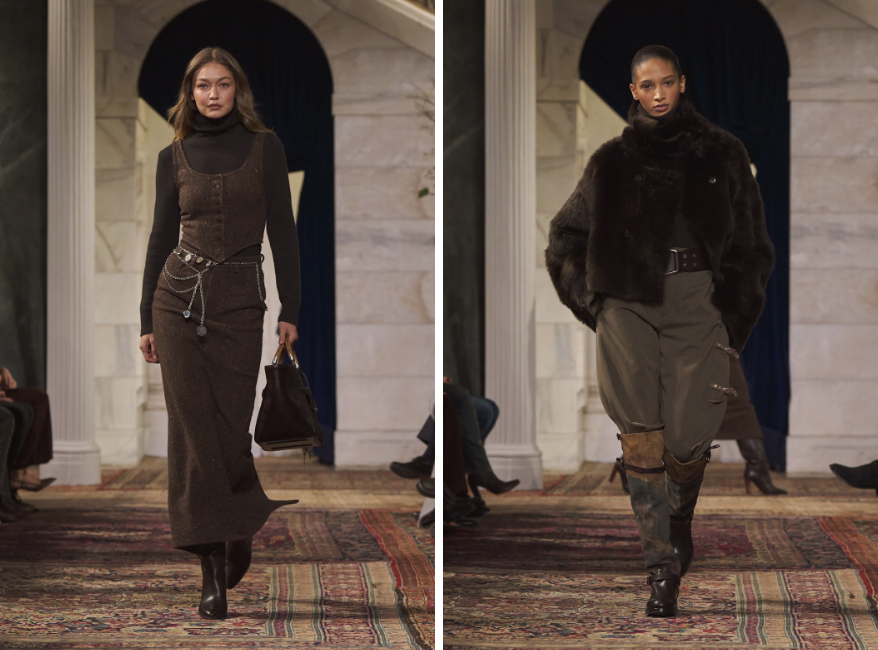
Images sourced by Vogue Scandinavia (Courtesy of Ralph Lauren)
But, you may find yourself asking, what exactly are we fighting for?
There is no question that contemporary America is marked by uncertainty, distrust, and discord. What the collections at NYFW suggest–extending beyond the three designers discussed here–is that we must resist allowing this moment to settle into a permanent state of fear. We have emerged from periods of turmoil before, and we can do so again. Perhaps we might look to today's creatives, such as the inspiring women envisioned at Carolina Herrera. We might recall the resilient youth and their fierce optimism on the Coach runway. We might even armour ourselves in imagination, drawing courage from the fantastical figures Ralph Lauren brought to life. In doing so–and by leaning on each other, learning from one another–we reject the greed and division that defines so much of the present, and leave space for younger generations to inherit something more hopeful.