
Ritual Identities: Yorgos Lanthimos’ surreal Prada campaign with Scarlett Johansson
Words by Lena Sophie Eckgold
Edited by Rachel Hambly
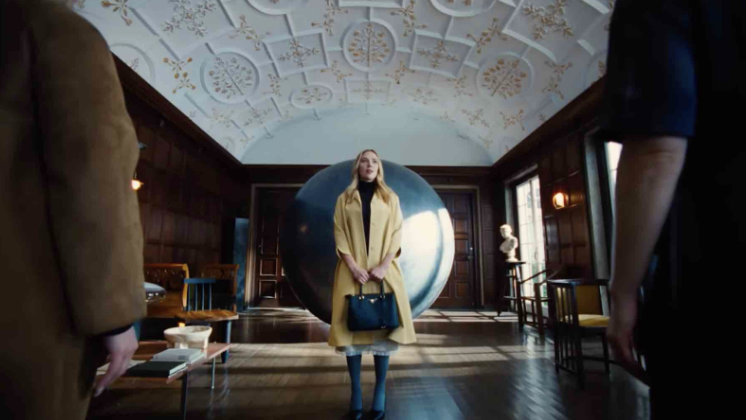
With Ritual Identities, Miuccia Prada and Raf Simons present a new episode of the Prada Galleria Bag campaign in September 2025 – this time directed by award-winning Yorgos Lanthimos, with Scarlett Johansson in the lead role. The 1:49-minute film is charged with surrealism, ritualistic gestures, and cryptic symbolism. But does the campaign actually advance arthouse art, or does it ultimately remain pure Prada product placement?
Greek director Lanthimos, acclaimed for films such as The Lobster, The Favourite, Poor Things, Kinds of Kindness, and most recently Bugonia, steps into the world of luxury advertising and collaborates with Scarlett Johansson for the first time. This is the third time she has been the face of Prada Galleria, following campaigns previously designed by artist Alex Da Corte (2023) and film director Jonathan Glazer (2024).
The Galleria Bag, originally launched in 2007, is one of Prada’s bestsellers. It is characterized by the iconic Saffiano leather, a patented, durable calfskin with a crosshatch pattern, and the historical reference in its name: the Galleria Vittorio Emanuele II in Milan, where Mario Prada opened his first shop in 1913.

In Ritual Identities, Johansson plays three women. First, there is the sternly dressed witch or guru figure who leads a mysterious ritual; then the urban seeker who roams New York and must gather the ingredients for it; and finally, a reborn version of herself who emerges from a black sphere. This sphere, which stands in the room like an unsettling, oversized object from a Magritte composition, forms the aesthetic core of the film. It is accompanied by a sombre, minimalist soundscape, a keyboard instrument somewhere between an organ and a piano, which evokes a gothic mood.
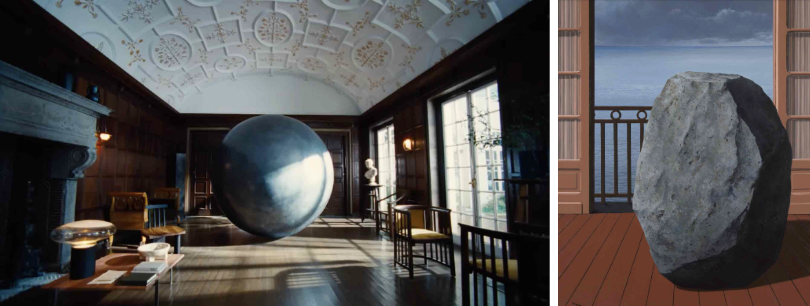
At the heart of the plot is an absurd inventory of ingredients that Johansson must collect – a morning breeze, the whispers of deceased relatives, rainwater from a cherry tree that has not blossomed, forest soil, the barking of a medium-sized dog, the ashes of a song about love or pain, a knotted guitar string, a fragment of ancient Chinese porcelain, and finally three drops of blood drawn at night. These objects do not form a coherent magical system but rather appear as scattered symbolic fragments. They represent air, water, earth, and fire as well as culture, emotion, and physicality.
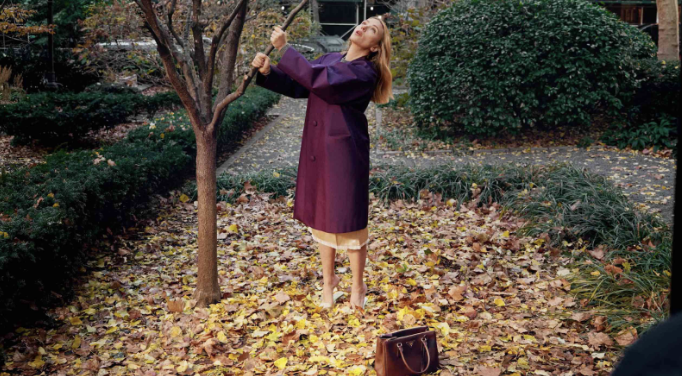
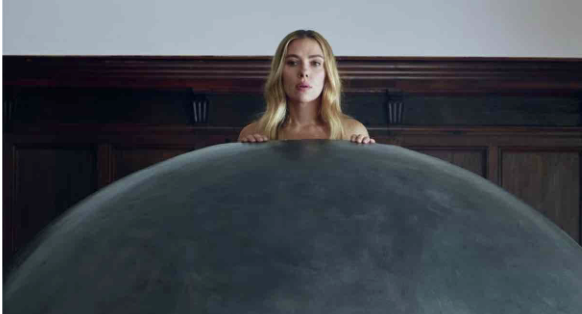
An entire world is broken down into its constituent parts and reassembled via the Prada Galleria Bag. Johansson places all these things in her bag, which serves as a central container. It thus becomes not only a vessel for the ritual but also an archive of personal items, emotions, and memories. At the end, she empties the entire contents of it into the gigantic black sphere. The interior of this object begins to sound; the camera approaches it; the process seems strange, almost extraterrestrial – until a head appears at the top of the sphere, and a new, perfected version of Johansson emerges from it, receiving her own Galleria.
The campaign, explains Johansson, deliberately plays with ‘the identities that live within all of us, the different masks we wear, the different characters we play, the different people we are with other people, in different relationships.’ Fluid identity has a dual effect here: firstly, as a mirror of Johansson’s persona, which dissolves into three characters, and secondly, as a reflection of the Prada brand, whose identity also appears to be changeable. At the same time, the Galleria remains a constant fixture in all versions of herself (albeit in different colors). This is precisely why it can accompany her through every hour, space, and role. Prada itself describes the Galleria as ‘totem, talisman, amulet central to the ritual and the everyday performance of life, a vessel for magical change’. The bag thus appears as a charged object that goes far beyond a logic of utility and functions as a carrier of meaning in real everyday practices.
Lanthimos interweaves these elements with mythological motifs. The witchy ritual refers to female, non-institutional knowledge and intuitive forms of power. Mary Shelley’s Frankenstein myth presents the image of the artificially assembled body, thereby symbolizing the construction of identity. The birth of Venus appears at the moment of the rebirth of the third Johansson, whose emergence from the black sphere is reminiscent of an aesthetically perfected, ‘artificially born’ beauty. But all these references seem more like superficial, aestheticized allusions than suggestions of actual depth.
The use of surrealism in the film also serves a strategic rather than an artistic purpose. Surrealism – especially in the tradition that Lanthimos represents – is not a mass-marketable, easily consumable vocabulary. The fact that Prada nevertheless allows his darker, stranger, more unsettling imagery implies confidence in an art-savvy audience. In this context, however, incomprehensibility also becomes a practice of distinction; it attracts attention through its enigmatic nature. At the same time, this surrealism remains decorative. It gives the impression that it is art, even though the film's structural function clearly lies in marketing. This also reveals the complex relationship between arthouse and fashion. Advertising films are increasingly staged as miniature versions of auteur cinema, but the creative process remains inevitably regulated by brand briefings, product placements, and marketing objectives. Thus, Ritual Identities appears to be a toned-down miniature of a Lanthimos film and not a work with genuine artistic power.
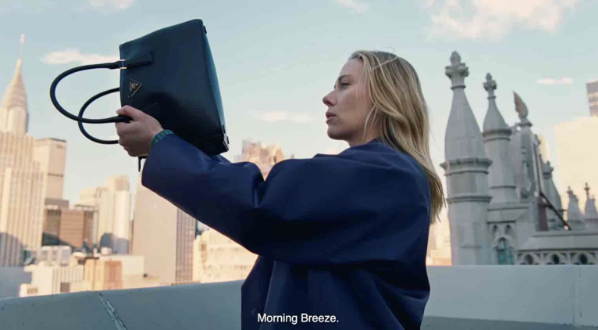
The film seems meaningful without developing any meaning. The symbolism is rich, the atmosphere dense, but the narrative structure stays empty. What remains is performative depth: a ritual that promises more than it tells. In the end, however, the film does not need a deeper complexity because its actual goal has long been established: to sell Prada, to mythologize the Galleria, to increase the brand’s cultural capital.
So, what does this ritual really tell us? That identity today is performative, fragmented, and malleable, and that luxury objects become tools with which we can organize and continuously recreate ourselves. In a way, it is a materialistic fantasy: a promise that an accessory can become a medium of self-renewal. And perhaps, considering the Galleria’s actual price range – between £2,600 and £7,200 – it is also an analogy for people who are willing to invest large sums of money to acquire a piece of supposed significance. This is precisely why Prada can afford to hire such a directing and acting duo: the mythologisation of the product has long been part of its identity.