Athleticism and Apparel at the 2026 Milan Winter Olympics
Words by Frances Davis
Edited by Rachel Hambly and Bailey Tolentino
While seeming to be two inherently opposing industries, sports and fashion happen to overlap frequently. Be it through complex sponsorship relations and brand logos on competition-wear or the impact of high-profile athletes as brand ambassadors and trend-setters, style is increasingly relevant in the sphere of competitive sports.
Acknowledged as the epitome of elite athleticism, the Winter Olympic Games return to the world stage this month, celebrating the highest level of athletic achievement. Audiences from every participating country turn their attention to who’s winning and who’s losing, with a critical eye to what these athletes are wearing while breaking records and competing at the ultimate level.
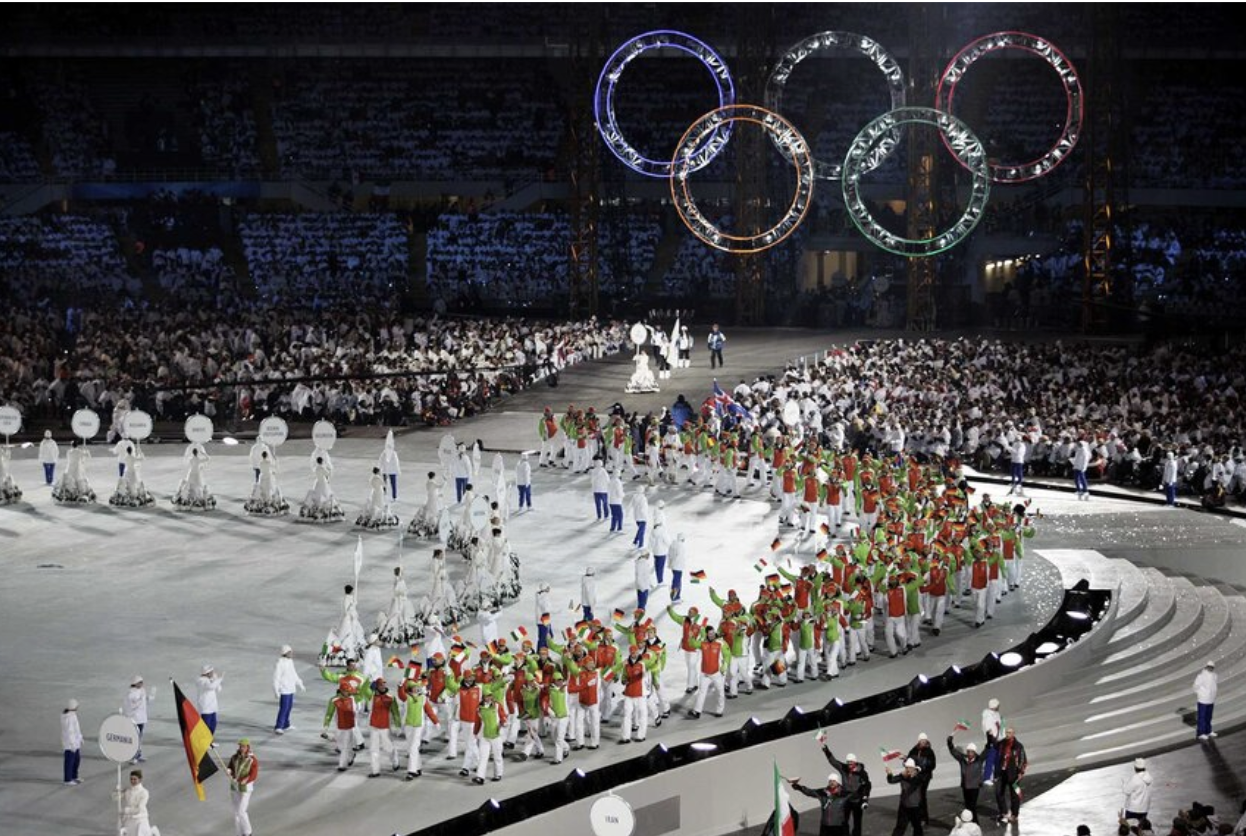
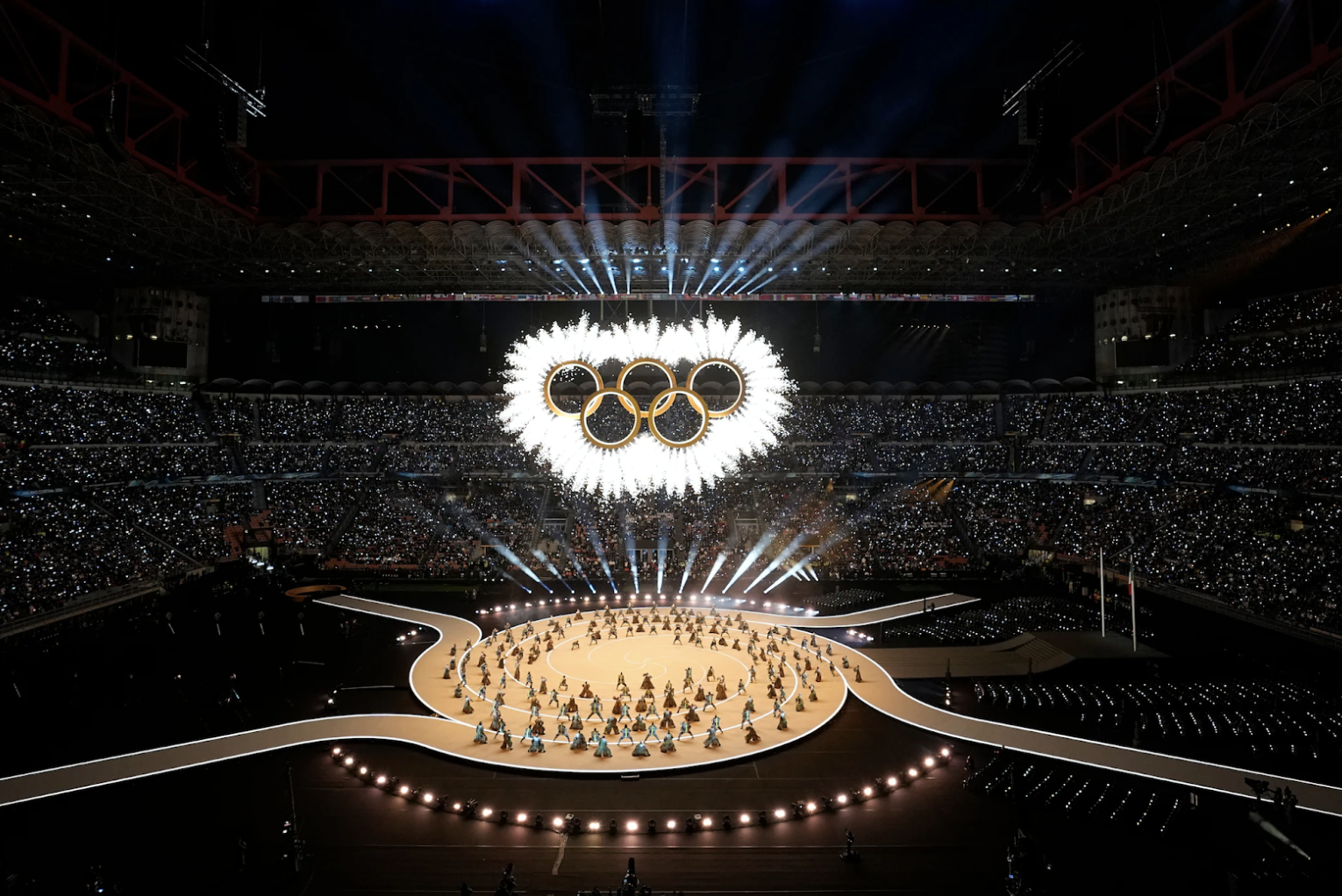
Arguably the most important outfit the Olympic athletes don during the Games is that worn to the Opening Ceremony. This year’s ceremony took place in Milan this past Friday, February 6th. Attended by all types, this event equally celebrates the accomplishments of the athletes who have out-performed in their respective sports to earn a coveted spot at the Games, as well as the host country’s history and hospitality. Italian movie stars, opera singers, and an orchestra all came together in celebration and commemoration of these esteemed Games.
The focal point of the Opening Ceremony was of course the traditional Parade of Nations made up of the nearly 3,000 Olympic athletes, bearing their nation’s flags to officially commence the Games. Each team, in collaboration with a singular brand representative of their country, is styled in outfits exclusively designed for the Opening Ceremony. Combining heritage, performance, and fashion is no simple task and thus results in a wide array of styles. While some designers lean towards more functional and athletic materials, others gravitate towards lavish silhouettes.
Here are the three best Opening Ceremony outfits worn at the 2026 Winter Olympics.
Ralph Lauren for Team USA
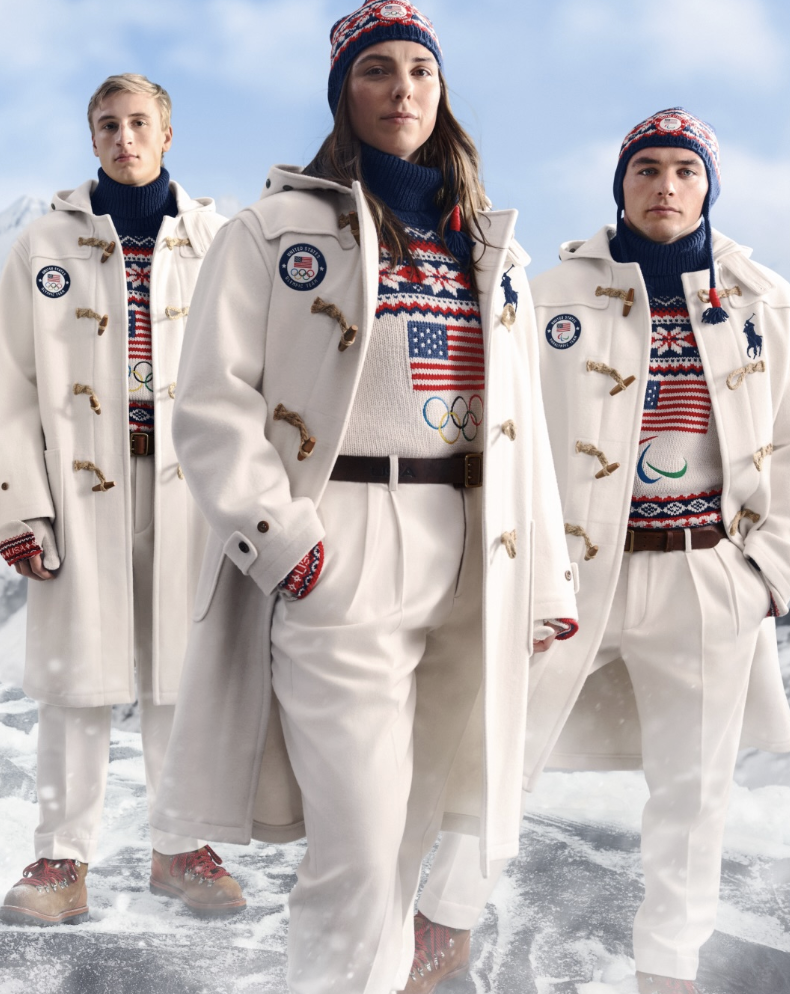
Marking a full decade of dressing Team USA, Ralph Lauren delivered precisely what many expected: a symbol-saturated homage to American iconography. The long white toggle overcoat served as the outfit's anchor piece, decorated with both the iconic Polo horse-and-rider logo and the US Olympics symbol, creating a walking advertisement doubling as a patriotic statement.
The intarsia woolen turtleneck in red, white, and blue coordinated with matching fingerless gloves and beanies, while the recurring flag emblem appeared throughout the ensemble. Perhaps most intriguing was the choice of work boots, which seemed to gesture toward American labor culture. Whether this read as authentic tribute or aesthetic appropriation remained a subject of debate among fashion commentators. The overall effect was unmistakably American, prioritizing recognizability over innovation, and leaning into the tried and true American character. As the largest team at the Games, the Ralph Lauren clad athletes were impossible to miss, captivating the world even before the athletics began.
Goyol Cashmere for Team Monogolia
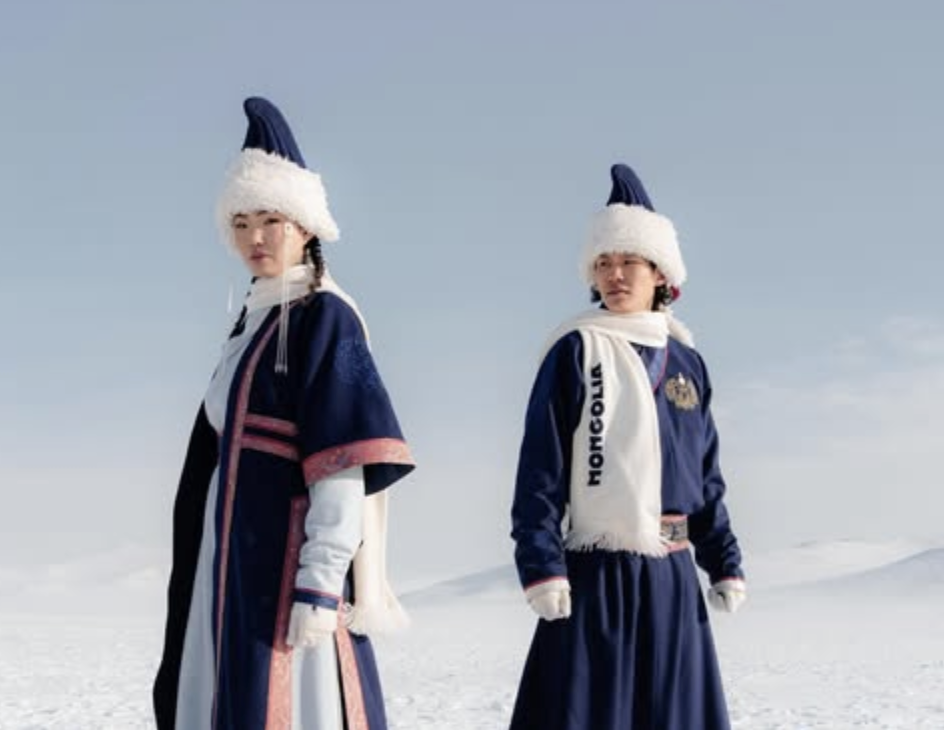
Fresh from their stunning debut in Paris during the 2024 Summer Games, Mongolia's Goyol Cashmere proved that their previous success was no fluke. The 2026 uniforms drew deeply from the Great Mongol Empire, transforming historical reference and tradition into contemporary luxury. As the brand and national team jointly articulated on social media, the goal was to "reintroduce the ancient Mongolian clothing culture – an inseparable part of our great history and cultural heritage – to the contemporary world and share it on a global stage."
The materials alone set these uniforms apart from the competition: silk, cashmere, and fur combined to create what may well have been the most luxurious pieces of the entire ceremony. The designs carried a meticulous and ceremonial character, effortlessly bringing the nation’s nomadic heritage to the world stage. Goyol's slogan – "What We Carried Through Winter - We Carry to the World" – perfectly encapsulated the collection's mission of presenting Mongolian nationhood through the language of high fashion.
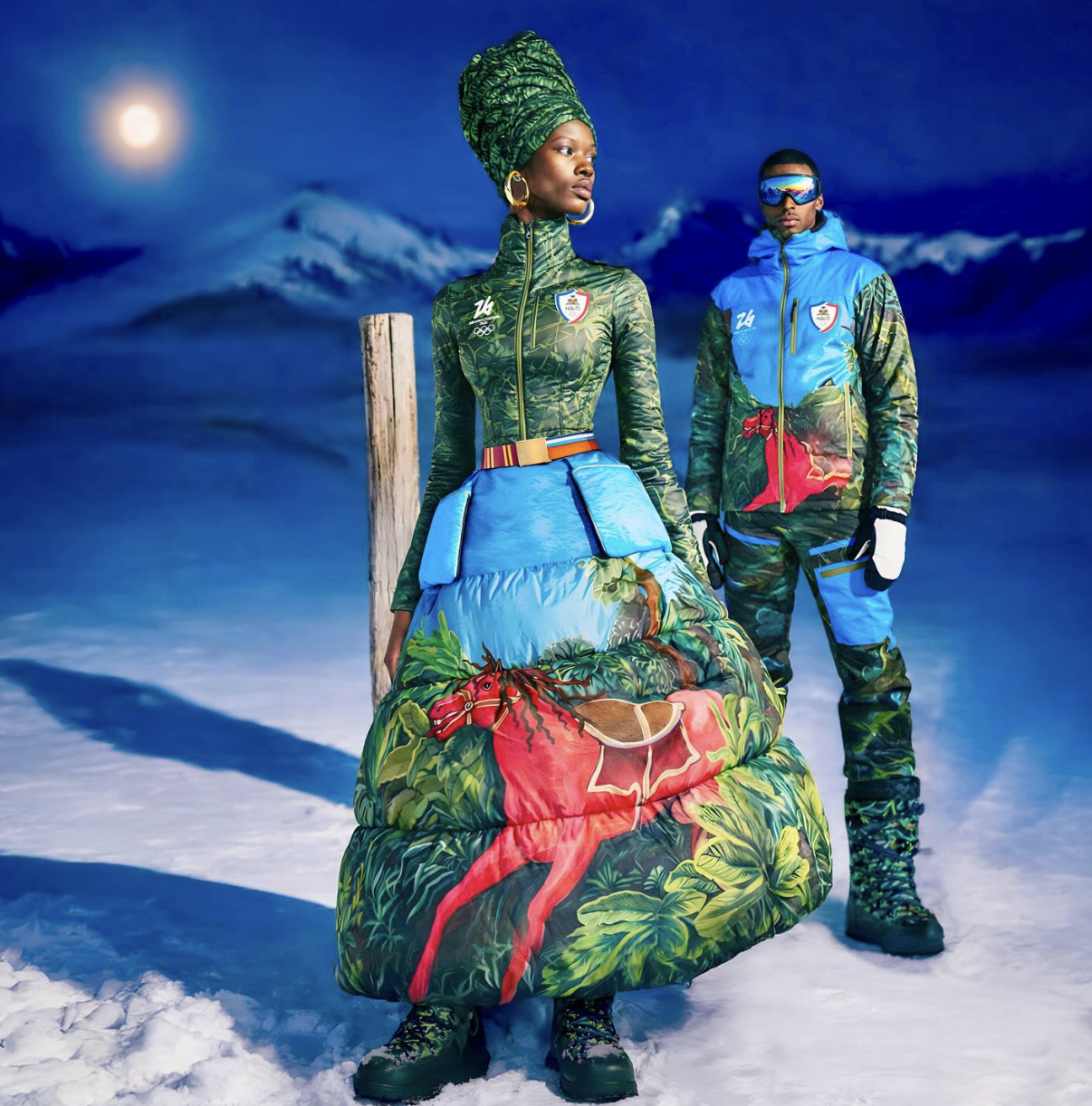
Stella Jean for Team Haiti
With only two athletes competing, Haiti's uniform had the rare opportunity for hyper-specificity. Designer Stella Jean seized the occasion, choosing to hand-paint every piece of her designs. Inspired by the work of celebrated Haitian painter-sculptor Édouard Duval-Carrié, Jean transformed each athlete into a walking canvas of Haitian artistic heritage, intrinsically linking artistic and athletic accomplishment.
But what truly distinguishes Jean's work was her stated philosophy and personal investment. Unlike many designers who leverage Olympic commissions for commercial gain, Jean created Haiti's uniforms pro bono. As she declared, "This uniform is the very symbol of the Haitian spirit," and her accompanying social media statement made the stakes crystal clear: "These uniforms are not an exercise in style. They are an act of responsibility. Every detail is intentional. Every centimeter of fabric carries the duty to tell a story—and the will to endure."
Jean positioned the uniforms as a corrective to the frequent erasure of Haitian history and contemporary reality. The very presence of Haitian competitors at the Winter Games is a formidable achievement, and Jean's designs insisted on this visibility. Her most powerful assertion reframed fashion itself as a political act: "What you see is not decoration. It is visibility as a form of survival."